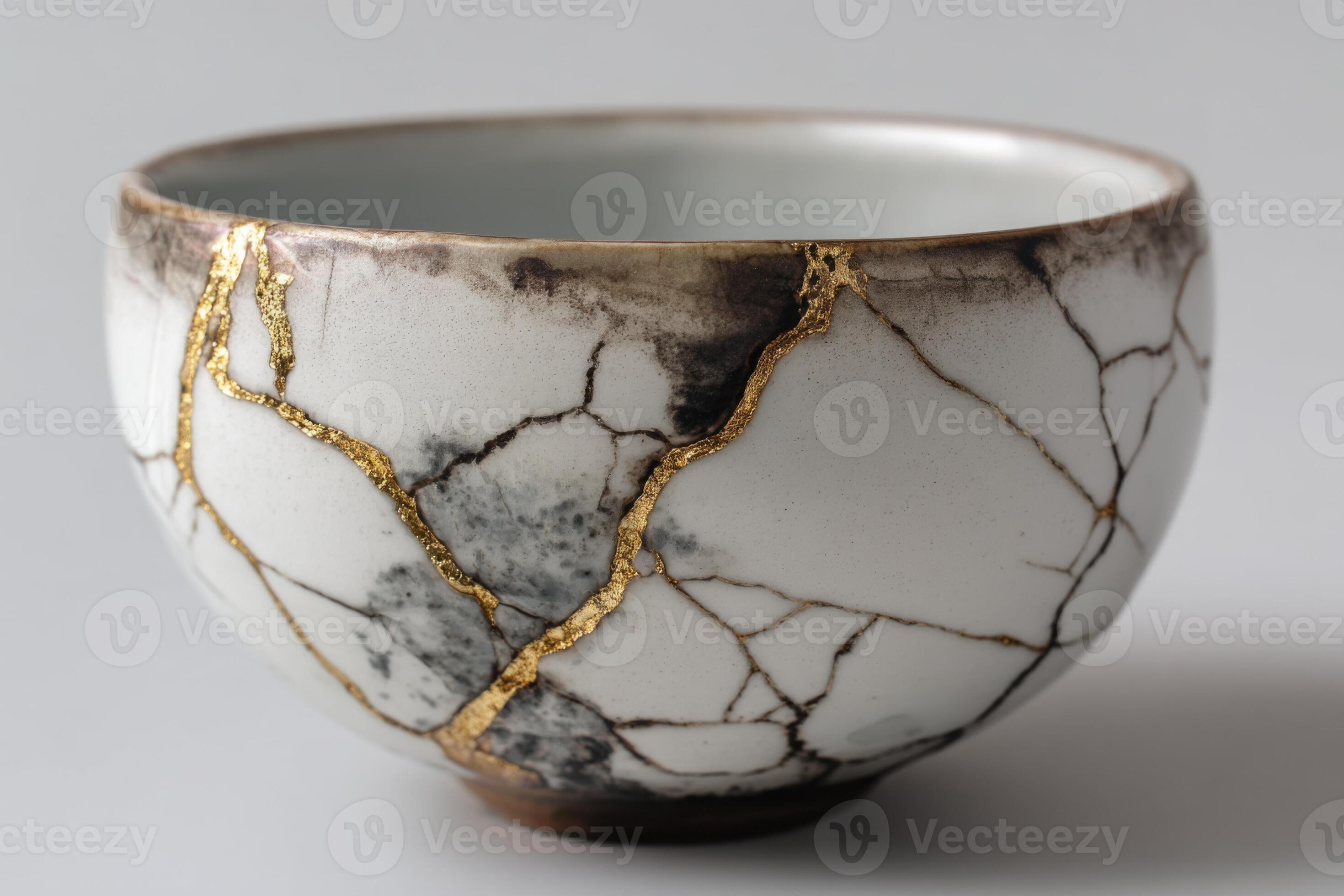
The Japanese practice of Kintsugi — repairing broken pottery with gold-infused lacquer — has inspired a growing movement in product design that celebrates visible repair and material imperfection. Contemporary practitioners like New Kintsugi (Netherlands) and Kintsugi Australia offer both repair services and DIY kits, while luxury brands including Swarovski and Loewe have incorporated Kintsugi aesthetics into product lines. The practice embodies 'wabi-sabi', the Japanese philosophy of finding beauty in impermanence and imperfection. From a circular design perspective, Kintsugi transforms the perception of damage: rather than triggering disposal, breakage becomes an opportunity for enhancement. Research by Chapman (2015) on emotionally durable design supports this approach — products with visible repair histories develop stronger user attachment and longer lifespans. The movement has expanded beyond ceramics: fashion brands like Nudie Jeans offer visible mending services, and furniture designers increasingly highlight joinery and repair marks as aesthetic features. Kintsugi demonstrates that design can reframe material degradation as value creation.
Back to Case Studies
WABI-SABI CERAMICS BY KINTSUGI
Focus | PRODUCT Cycle | TECHNICAL X1 | REUSE Business Model | PRODUCT ORIENTED Material Flow | CIRCULAR