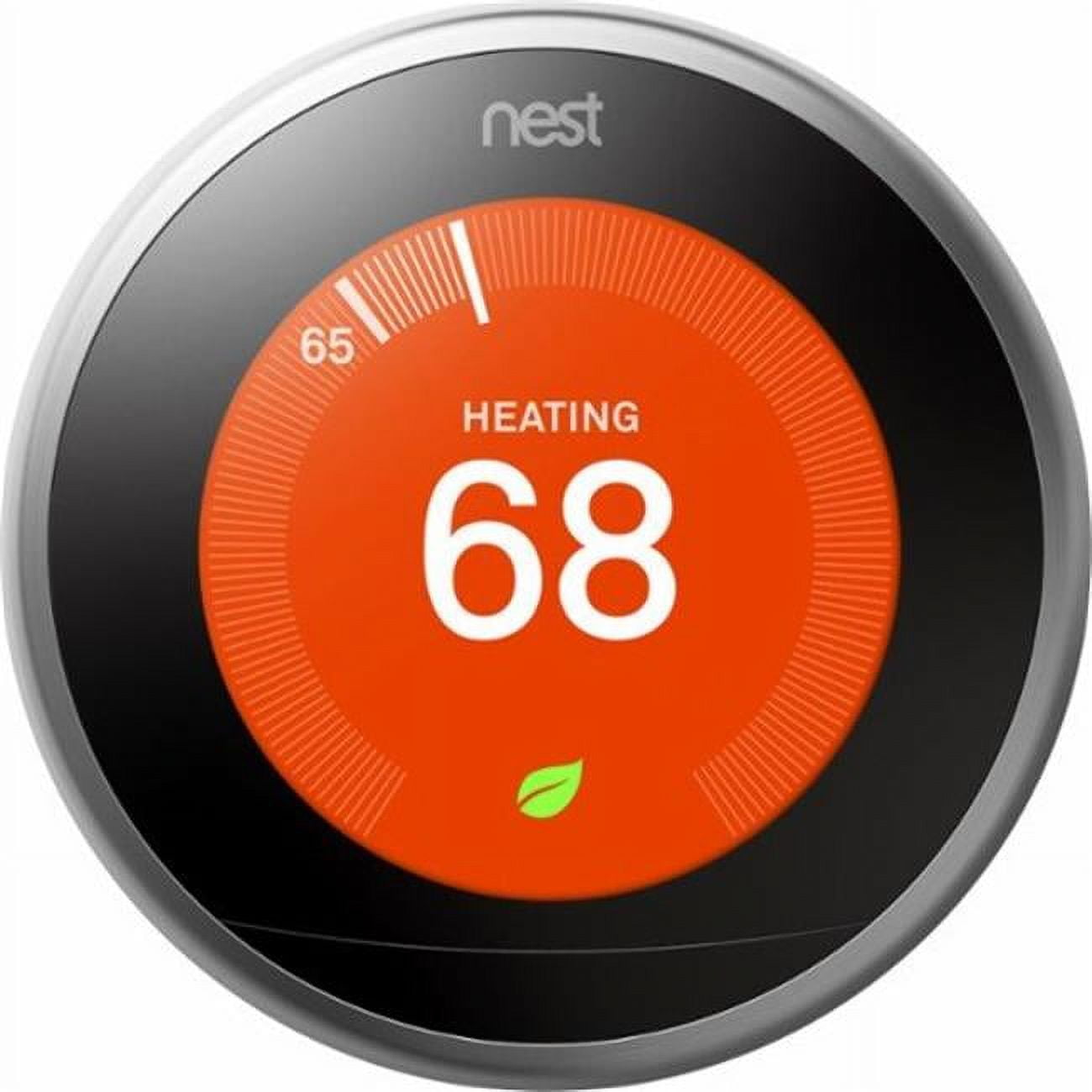
The Google Nest Learning Thermostat is a landmark example of eco-feedback and persuasive technology applied to sustainable behaviour change. The device uses machine learning to understand a household's thermal patterns and occupancy habits, automatically optimising heating schedules to reduce energy waste. The "green leaf" icon appears when users select energy-saving temperatures, providing immediate positive reinforcement that nudges behaviour without restricting choice. Evaluations by the UK Behavioural Insights Team found that Nest users reduced their heating demand by 6-16%, with the highest savings among those who most actively engaged with the eco-feedback features. The thermostat also provides monthly energy reports comparing consumption to similar homes, leveraging social comparison — a powerful persuasive design strategy. From a product design perspective, the Nest demonstrates how embedding behavioural science principles (feedback, rewards, social norms, default settings) into a physical product can meaningfully shift user behaviour toward sustainability. The device's sleek design, intuitive interface, and passive learning capabilities show that sustainable behaviour interventions need not compromise user experience.
Back to Case Studies
GOOGLE NEST LEARNING THERMOSTAT
Focus | PRODUCT Cycle | BIOLOGICAL X1 | REFURBISH Business Model | PRODUCT ORIENTED Material Flow | LINEAR